Rainbow Harrison

Introduction
Agile teams are now common across government, but not everyone is familiar with how they work day-to-day.
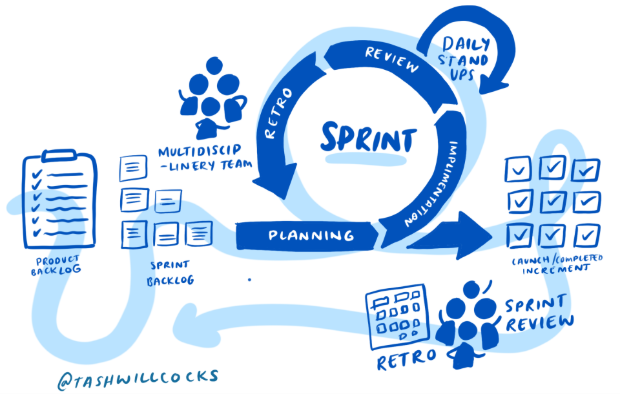
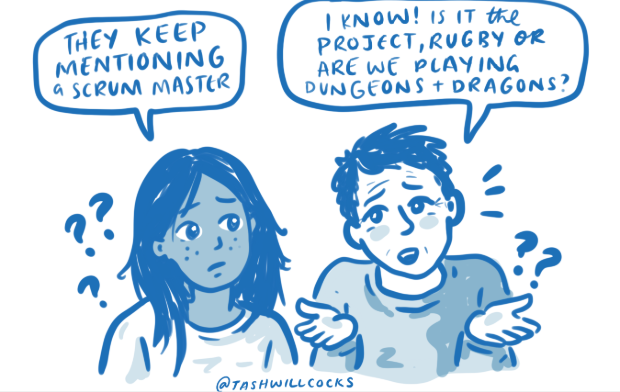
In DBT’s Digital, Data and Technology directorate, we build and continuously improve products and services. We work in short cycles, known as sprints, use user research to shape what we build, and focus on solving problems rather than jumping straight to solutions. For people not used to working this way, some of the terminology can feel unfamiliar at first. Terms like ‘Scrum Master’ or ‘user stories’ can make it harder to follow how decisions are made within the team.
Agile started as a response to rigid delivery approaches that struggled to adapt in digital environments, where change is constant. At its core, agile is about iterative delivery, working closely with users, and using what we learn along the way to make better decisions. It allows teams to deliver value earlier, instead of waiting for a single finished product. These principles are now used widely beyond technology, wherever organisations need to move quickly, respond to change and stay focused on user needs.
If you are not familiar with how an agile team works, it is easy to see why confusion can arise. You might expect certainty upfront, with fixed plans, clear timelines and everything mapped out in advance. That is not usually how we work, which can make things feel unclear at first. Across the Civil Service, colleagues often work with agile delivery teams without fully understanding how they operate. This can lead to confusion and makes collaboration harder than it needs to be.
This is one of the things our “Digital and Agile in Government Basics” training is designed to address. Through delivering the programme across DBT, we have seen how a better understanding of agile helps people work together more effectively, particularly when teams span different roles, disciplines and levels of experience.
How we delivered the training at DBT
The training we delivered for DBT was a joint effort between the capability and delivery teams. We partnered to co‑facilitate the sessions, combining training expertise with practical delivery experience.
Delivery managers already have strong facilitation experience from their roles, which include running agile ceremonies and engaging stakeholders. They also bring experience of working in agile environments and an understanding of how it works in practice. During the training, this allowed us to provide context and share real examples to support understanding.
Meanwhile, the capability team brought expertise in learning design, pacing, and inclusive facilitation. They adapted the pace and materials to each audience, managed cognitive load, and ensured all participants were included in group discussions.
This approach aligns with broader Civil Service priorities around delivery excellence, innovation, and developing talent. Senior leaders have highlighted the importance of drawing on the full range of skills and experience across the organisation and creating opportunities for people to grow and share expertise.
It reinforces the idea that capability building is not separate from delivery, but an integral part of it.
What we observed in training
Feedback from delegates has been positive. Participants described the sessions as engaging and relevant, and highlighted the value of hearing directly from people who work in delivery roles. This suggests that combining these skill sets strengthens the learning experience.
Even during training, we noticed shifts in the language that people were using as they gained understanding of agile ways of working. Participants reported having clarity on terminology, and a deeper understanding of the principles of agile.
What ‘good’ looks like
The aim of Digital and Agile in Government Basics is not to turn everyone into an agile practitioner, but to create enough shared understanding across the organisation to allow teams to collaborate effectively.
In practice, that means people are:
- comfortable with uncertainty early in delivery
- able to engage meaningfully with user research and evidence
- supportive of incremental progress rather than waiting for fully finished solutions
Our goal is to create a shared understanding that teams can work from. In this case, “good” looks like a team that can deliver value together because they understand each other’s ways of working. When the whole team understands the agile practices being applied, there is more trust and the focus shifts from explanation to delivery.
Why this matters at scale
The Civil Service is made up of many professions, forming multi-disciplinary teams, which all need to work together effectively to deliver with excellence. A relatively small investment in foundational agile literacy can deliver meaningful returns by building stable connections between delivery teams and the wider teams they support. By building trust between professions, we empower teams to deliver their best work.
Based on the feedback we have received from Digital and Agile Basics sessions, this approach is already helping colleagues engage more confidently with modern delivery practices.
When asked what people would do differently following the training, the responses included “be more mindful of users and the balance between user and business needs” and “be more aware of integrating inclusive design principles”.
Participants reported that they had a greater understanding of working with other teams. Even participants who were already agile practitioners benefited, with one saying they were more confident “selling the value of what my profession can bring to my team”.
Conclusion
When agile ways of working are adopted, they shape how services are designed, built and sustained across government, not just the delivery teams using them.
A foundational understanding of agile gives colleagues the language and confidence to collaborate more effectively. At DBT, we have seen that building strong digital capability depends on this shared understanding, and on creating opportunities for people to learn from each other.
If you work with digital or agile teams and want to collaborate more effectively, look out for agile training opportunities in your department or on Civil Service Learning.
Just like our training, this blog post was a collaborative effort between the delivery and capability teams. Thank you to Andy Palmer, Natalie Cousins, Kate Roberts and Liz Catherall for your support.

1 comment
Comment by Liz Catherall posted on
It has been a great experience seeing different people benefit from this training but more importantly the examples that bring this to life from your experience Rainbow. Thank you to you and the team for championing the Agile way!