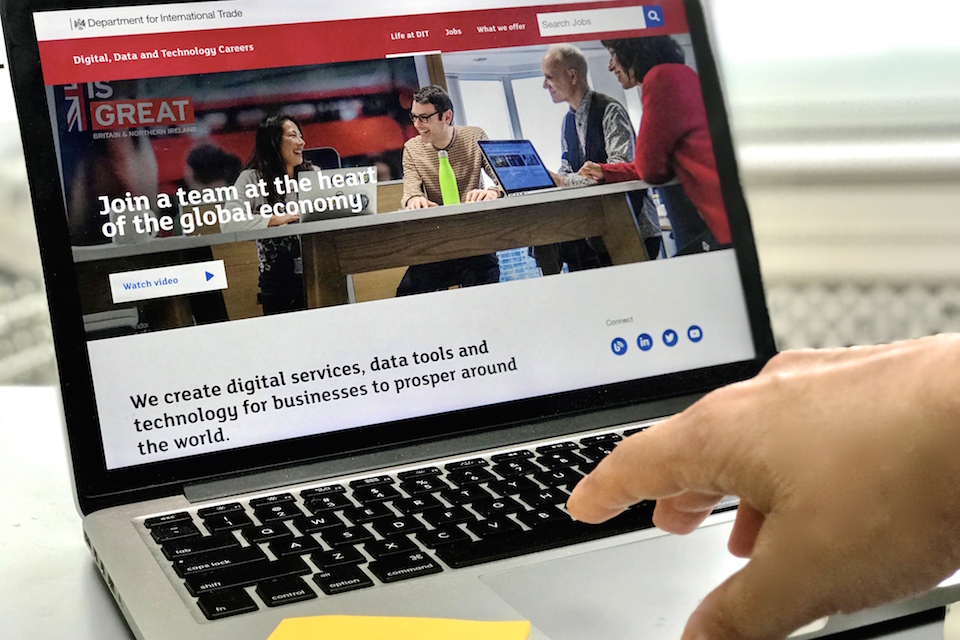
The Digital Data and Technology directorate at the Department for Business, Innovation, Science and Trade (BIST) is an exciting place to work. Our teams solve problems that have real impact on the UK economy and businesses. Our people work collaboratively across professions and portfolios, gaining experience and building their skills in varied projects. We even have time to learn and experiment through our quarterly Firebreak Week.
If this appeals to you, we would love you to join our team.
If you are new to the Civil Service (and even if you are not) the recruitment process might seem overwhelming. However, the DDaT recruitment team is here to help. We support candidates right through the journey, from application to onboarding, and we see first-hand what applicants need to succeed.
In a previous blog, I outlined how to get started and familiarise yourself with how the Civil Service recruitment process works. The next step is to write your application. In this blog, I outline some helpful tips and pointers to give you the best possible chance of success at application stage.
What do we want from your application?
At sift stage, we’re looking at your experience, so it’s not about how much you’ve done, it’s about how well you explain it. A common mistake I see is candidates listing skills without showing how they’ve actually used them.
For example, if a role asks for Agile experience, simply writing “experience working in Agile” doesn’t give us enough to go on. What really stands out is when you explain what you did, how you worked with others and what the outcome was. That’s what helps us picture you in the role.
One thing I always say to candidates is: don't make the panel join the dots for you.
At sift stage, we can only assess what's written in front of us. We can't assume what you've done based on your job title, organisation or the projects you've worked on. If you meet an essential criterion, make sure you tell us how you meet it and back it up with a good example.
The strongest applications make it easy for the panel to see the evidence. Rather than saying what you were responsible for, explain:
- what you actually did
- the decisions you made
- the challenges you faced
- the impact you had
That's what helps us understand your experience and score your application against the criteria.
Remember that panel members won't necessarily know your organisation, systems or acronyms. What feels obvious to you might not be obvious to someone reading your application for the first time, so keep your examples as clear and accessible as possible.
Bringing your application to life
When it comes to your personal statement, keep it simple and structured. A really effective technique is to use each essential criterion as a heading and then clearly show how you meet it. It might feel a bit predictable, but it works, especially from a sifting perspective.
It means you're making it easy for the panel to match your experience directly to what we're looking for, which can only work in your favour. Even something as simple as labelling sections EC1 (Essential Criterion 1), EC2 and so on is absolutely fine if you're tight on space.
When writing your examples, focus on your contribution. Most of us work as part of a team, but the panel needs to understand what you did. Don't be afraid to use "I" and be clear about the role you played.
Using the STAR format is an excellent way to outline examples to support the criteria. STAR stands for Situation, Task, Action, Result, and there is lots of guidance available to help you use it to structure your application.
A common pitfall is spending most of your word count describing the situation and very little explaining your actions or the results. A small amount of context is helpful, but it's your actions and achievements that will score the marks.
Finally, don't undersell yourself. I've seen plenty of candidates with excellent experience who don't fully explain the difference they've made. If you've improved a service, solved a difficult problem, delivered a project, built strong stakeholder relationships or helped users achieve a better outcome, tell us! This isn't about exaggerating your achievements. It's about helping the panel understand the value you've brought.
Writing your CV
Your CV is just as important as your personal statement, so don't treat it as an afterthought.
I would always recommend tailoring your CV to the role you're applying for. Take a good look at the essential criteria in the advert and think about which parts of your experience best demonstrate those skills. If a role is looking for stakeholder management, Agile delivery, user-centred design or service improvement, make sure those examples are easy to find in your CV.
Try to keep everything relevant and focused. There's no need to include every task you've ever completed or every achievement from your career. Instead, concentrate on the experience that is most relevant to the role and the impact you've made.
A common mistake I see is candidates listing responsibilities rather than achievements. Saying you were responsible for something is useful, but it's much more powerful to explain what you actually delivered, improved or influenced. Think about the difference your work made and make sure that comes across in your examples.
Keep your CV clear and easy to read too. Recruitment panels review a lot of applications, so a well-structured CV can really help. Use clear headings, keep information concise and avoid large blocks of text where possible.
Your CV and personal statement should work together. Your CV gives us a snapshot of your experience, while your personal statement allows you to go into more detail and demonstrate how that experience meets the essential criteria. When both are tailored to the role and tell a consistent story, you're making it much easier for the panel to see why you're a strong candidate.
One question I always encourage people to ask themselves before submitting an application is: if the panel only spent a couple of minutes looking at my CV, would they immediately understand why I'm a good fit for this role? If the answer is no, it's probably worth another edit!
Using AI to support your application
A quick note on tools like Copilot. They can be great for structure and formatting, but the content still needs to be genuinely yours. Your own experience, your own voice. That’s what we’re really interested in. All the information on what you can and cannot use AI for in Civil Service recruitment is here: Artificial intelligence and recruitment | Civil Service Careers
Closing thoughts
You have already done the hard part by gaining the skills and experience. Your application is simply your opportunity to show us that. Take the time to tailor it to the role, clearly demonstrate how you meet the essential criteria and don't be afraid to highlight the impact you've made.
If you're interested in joining us, keep an eye on opportunities on Civil Service Jobs and search for Department for Business and Trade* vacancies. We regularly advertise roles across our Digital, Data and Technology and Cyber teams, and we'd love to hear from you.
Good luck with your application and we hope to see you at interview soon!
* The Department for Business and Trade is changing. It is now the Department for Business, Innovation, Science and Trade. At the time of writing, this change was not yet reflected on the Civil Service Jobs platform.