Keely Flint

The government has committed to reducing the regulatory burden on businesses by cutting unnecessary complexity, duplication and administrative costs. As the department whose mission is economic growth, our remit is to ensure that regulation supports growth rather than holding it back.
As a service designer, I know how important it is to understand how businesses interact with our services, not just in theory but in reality. We need to see the services in context to know what the burden of regulation looks like, before we can reduce it.
By “context”, I mean the multitude of factors affecting how businesses operate. Context is multi-layered and adds a lot of complexity that is difficult for us to model internally. Data analysis and paper research are both valuable for user centred design, but truly understanding context requires proximity to lived experience.
Do we really understand business needs?
We perform extensive user research when designing our services – take a look at some previous posts explaining how we do this. We test prototype beta or live services with user groups and gather user feedback. However, when we do this, are we getting the full picture of user needs and whether they are being met?
It’s not that our data is wrong, it’s just incomplete without context. Expert insight can help us to have a view of business needs, but to truly support them we need to stay closely connected to businesses.
This is not a challenge that is unique to DBT. Any service being designed for use outside of government will be used in a complex context that is difficult to capture using internal models alone.
An SME safari
To support our mission to reduce regulatory burden, we embarked on an “SME safari”. This is where representatives from DBT visit businesses in a region and build an understanding of how policies impact their lived experience. I saw an opportunity to apply this method to understanding how businesses use our services in context.
Visiting businesses in situ allowed me to shift my thinking from “how do users experience this service?” to “how are business owners making decisions in context?”.
Who we spoke to and why it mattered
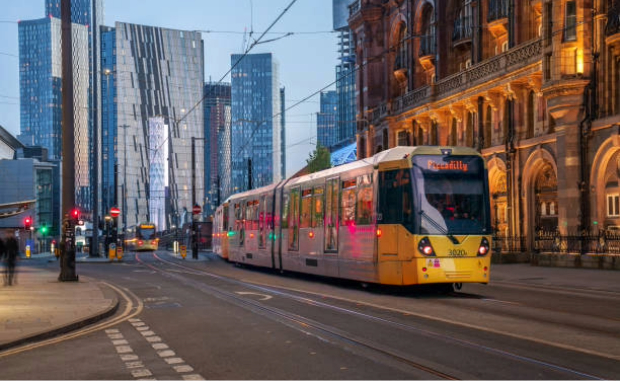
As part of the SME safari, we met with founders and CEOs of businesses including an established architectural practice who has shaped the modern Manchester skyline. We also met with an online homeware retailer who scaled up during the pandemic and has expanded through a high street presence in Manchester’s thriving creative quarter. We discussed subjects such as trading conditions, their growth mindset and how government can help them more.
As the name suggests, user research often focuses on the end user of a service. That is the person who completes the form, uploads the documents, accesses the information themselves. By speaking to business owners, I got to understand an entirely different perspective – that of the people who make the decision to use the service in the first place.
These decision makers need some level of certainty to have the confidence to take risks with their businesses. If services are fragmented, complex or hard to find or understand, this doesn’t just impact the operational users of the service. It affects the confidence of the decision maker and ultimately their decision whether or not to grow.
What was the context?
The SME safari helped me to appreciate the multitude of factors that affect a business’s decision to grow. We came to understand that “burden” is not a single concept but a multilayered one. Similarly, the context in which a business operates is multifaceted – how large is it? What sector does it operate in and where geographically? What life stage is the business in and how resilient are they? What is their appetite for risk and how are they responding to external factors?
Business owners do not have a choice in which services they must access to be compliant. However, they do have a choice in whether they engage in activities that make this compliance necessary. For example, if a business wants to export, they will need a licence, but they can choose not to export at all. What we found was that this higher-level decision is affected by many factors, including some related to the design of our services.
Growth is shaped by past shocks (such as the pandemic), a desire for resilience and “safe growth”, awareness of government services and how they are perceived. This is one reason why we need to design services that are easy to use, so they are not perceived as being too complex.
These insights build on our understanding of the practicalities of how users interact with our services to give a more complete picture including when and why they engage with the services.
Delivering the next generation of services for businesses
Staying closely connected to businesses to help us shape our views is one of our shared behaviours at DBT. Being able to act with confidence with valuable insights will enable us to deliver services that support growth.
The context in which businesses operate is the backdrop to how they engage with government and use our services. This is so important in how we deliver the next generation of services for business. We aim to shift from siloed transactions, to joined up journey management across the government service ecosystem.
We all need closeness to businesses to help design services for reality. With our agenda to reduce the regulation burden for businesses, closeness not just to operational staff but decision makers are what will ensure success.
What's next?
There will be more business safaris which gives us in DDaT an exciting opportunity to evolve the way we work. We can take steps to be closer to businesses and understand how they make complex decisions. As we move away from isolated services into an ecosystem of joined up services, we need to understand more than just individual users interacting with tools. Safaris give us the insights we need to understand how businesses interact with government and make complex decisions at a systemic level.
Joining these safaris is also another opportunity to work more closely with our colleagues in policy. Together we can also improve our services through co-design, as my Digital, Data and Technology (DDaT) colleagues learned when they formed a co-lab for service design.
If we really want to reduce the burden of regulation, we need to design services that work for businesses. That means understanding businesses, for which we need more than just data. We need judgement, which comes from staying close to businesses and understanding their decisions.
If you are involved in the design and delivery of future services, take any opportunity to encounter your users in the field. You will find that the context in which they make decisions shapes their interaction with the service before it even begins.

3 comments
Comment by Alex Participant posted on
Thanks for describing the SME safari. Are there more design examples available?
Comment by jennierich posted on
Thanks for your comment, Alex.
It is too early to give any design examples from the SME safari itself.
However, here is a blog where DDaT teams have used user-centered design effectively to develop DBT tools for UK businesses.
Business Growth Service - https://digitaltrade.blog.gov.uk/2026/03/11/strengthening-business-support-through-user-centred-evidence-led-collaboration/?utm_source=MS_Teams&utm_medium=Referral
Comment by Taylor Designer posted on
Did the team publish follow-up examples from the safari workshops?